B2B pricing strategy: how to stop leaving money on the table?
Mondrio Team · Aug 20, 2026 · 2 min read
Most B2B companies are leaving significant revenue on the table. Not because their product is not good enough, but because their pricing has not kept up with it.
The numbers tell the story:
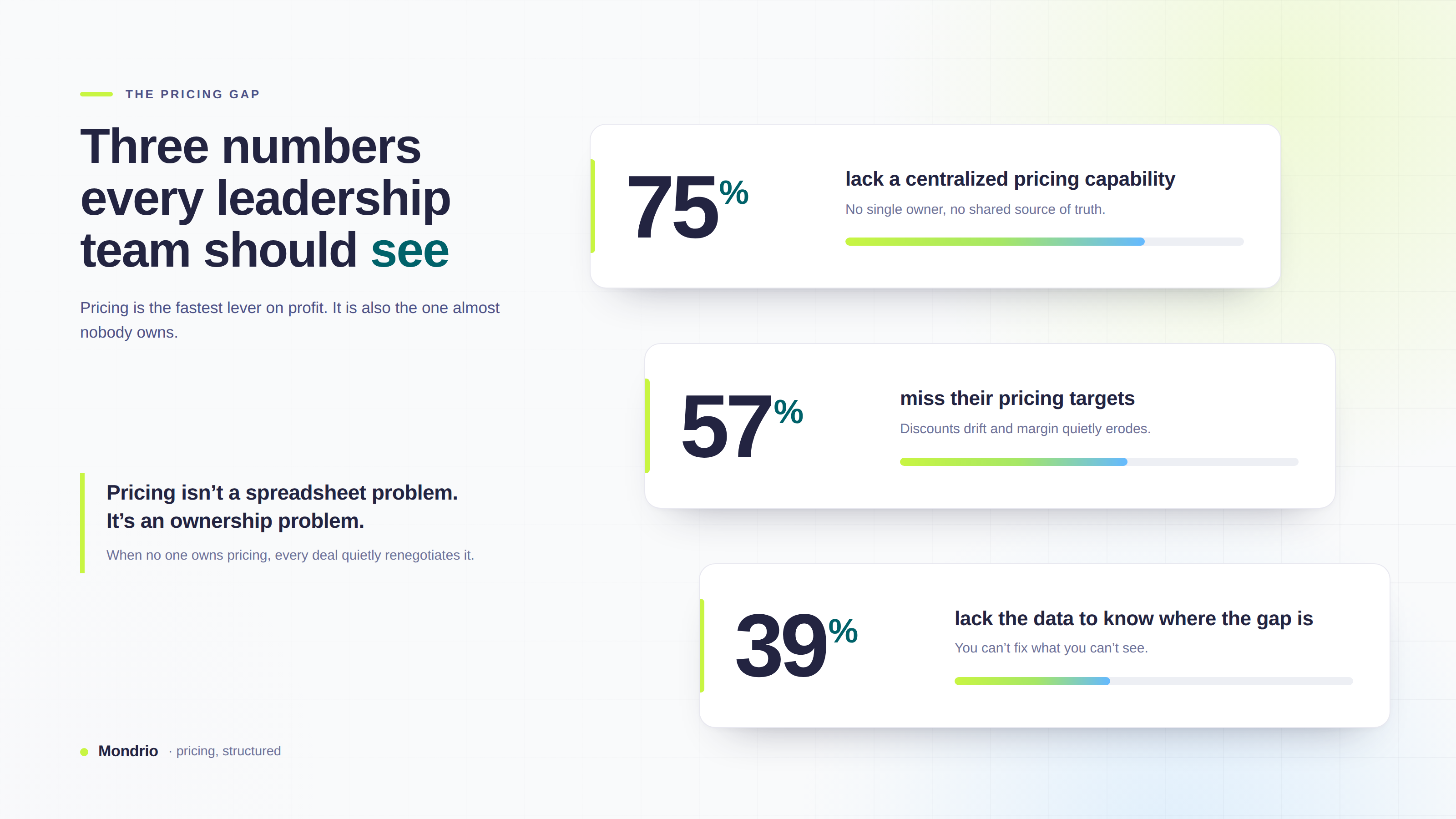
At the same time, pricing remains the single highest-leverage growth initiative available: a 1% improvement in pricing yields more profit than a 1% improvement in volume or cost reduction.
What is a B2B pricing strategy, and why do most companies get it wrong?
A B2B pricing strategy is the framework a company uses to determine what to charge, how to charge it, and how to evolve pricing over time as its product and market change.
The key word is "framework." Most companies treat pricing as a project: a one-time exercise that produces a new price list, a packaging refresh, or an updated rate card. They bring in help, run customer research, design something that works for today, and then move on.
The problem is that within months, solution changes and competitive moves make that work outdated. New features ship. Competitors reprice. A new customer segment emerges. The pricing model stays static while everything else evolves.
The 3 pricing mistakes we see most often in B2B
After working with 150+ B2B companies, the same patterns come up again and again.
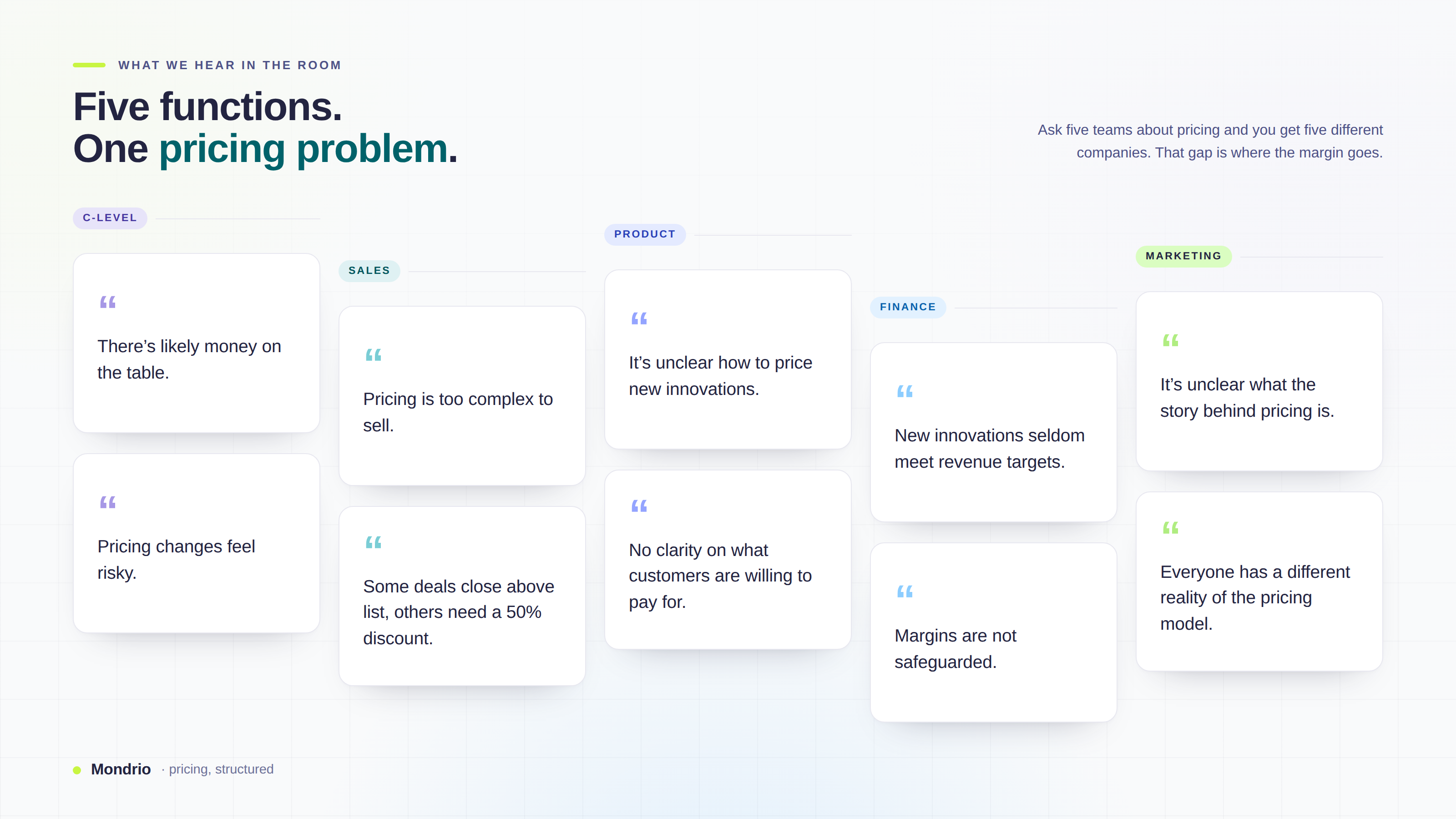
1. Pricing is owned by everyone, which means it's owned by no one
In most B2B companies, pricing decisions are spread across leadership, sales, product, finance and marketing with no single owner and no structured process for making changes. The consequences run deeper than most people realize. Here's what we hear across the organization:
2. Pricing is treated as a one-time event, not a capability
Another very common mistake is not getting the price wrong: it's not having a process to keep getting it right. Companies invest in an initial pricing project, implement the output, and then leave it untouched for 18-24 months. By then, the model is disconnected from the value the solution actually delivers.
3. Prices don't reflect what customers are actually willing to pay
Most B2B pricing is built bottom-up, from cost or from gut feel, rather than from actual customer research. Companies often discover that customers would happily pay significantly more for certain features, while other parts of the product they're charging a premium for are seen as table stakes. Without data and customer insights, you're guessing.
The bottom line
B2B pricing strategy isn't a project you complete. It's a capability you build. Companies that treat pricing as an ongoing discipline, with customer research, expert guidance, and the right tools to monitor and iterate, consistently outperform those that treat it as a box to check.
Every month without a pricing review is a month of compounding revenue left on the table.
Mondrio helps B2B companies build a continuous pricing capability, combining an AI-powered platform, customer research, and expert guidance. If you want to know where your pricing is leaving money on the table, book a free sparring session.